
Rotablation
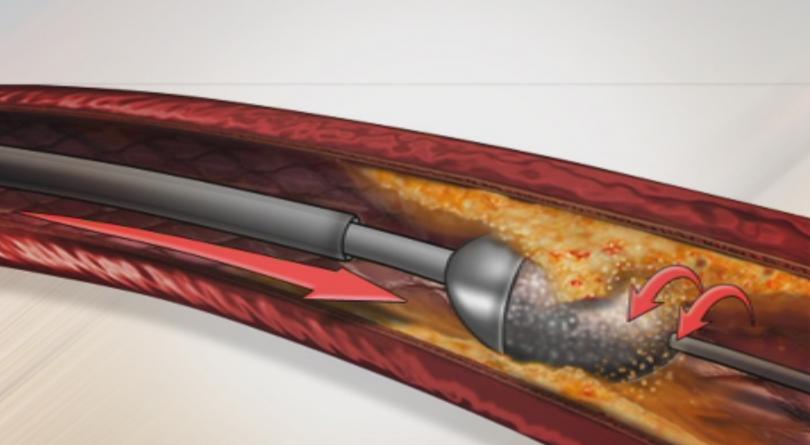
Rotablation, also known as rotational atherectomy, is an advanced minimally invasive technique used to treat heavily calcified coronary artery blockages that cannot be opened with standard angioplasty balloons. In such cases, hard calcium deposits act like stone walls inside the arteries, restricting blood flow and causing chest pain, breathlessness, or even heart attacks. Rotablation helps prepare these rigid lesions, allowing stents to be placed safely and effectively. Under the expertise of Dr. Umesh Akkalkotkar, Senior Consultant & Interventional Cardiologist at N.M. At the Wadia Institute of Cardiology, Pune, patients receive precise, high-success rotablation treatment, backed by modern technology and extensive clinical experience.
What is Rotablation?
Rotablation uses a specialised catheter with a tiny diamond-coated rotating burr that gently sands down calcified plaque inside the coronary artery. The debris produced is microscopic and safely washed away by the bloodstream.
Procedure Overview: A thin wire is passed across the calcified blockage, and the rotating burr (spinning at nearly 150,000–200,000 rpm) is advanced to modify the plaque. Once the artery is adequately prepared, angioplasty and stent placement follow. The procedure is performed in a cath lab under local anaesthesia.
Key Features: Designed for severely calcified, undilatable lesions in patients where standard angioplasty techniques are insufficient.
Applications: Essential for achieving optimal stent expansion and long-term success in patients with tough, long-standing calcium buildup.