
Transcatheter Aortic Valve Replacement (TAVR)
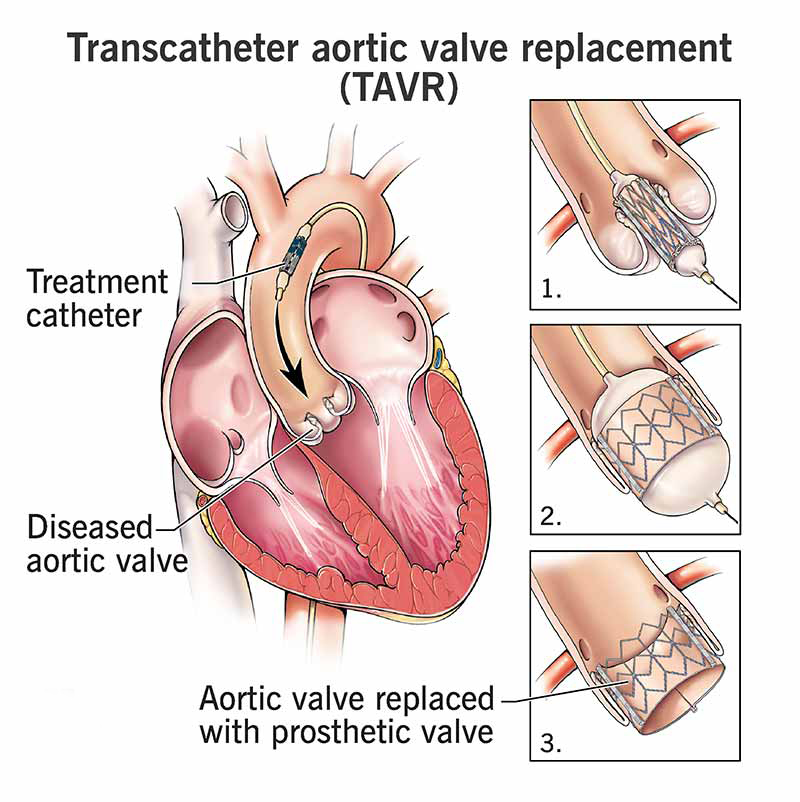
Transcatheter Aortic Valve Replacement (TAVR), also known as Transcatheter Aortic Valve Implantation (TAVI), is a minimally invasive procedure used to treat severe aortic stenosis—a condition in which the aortic valve narrows, restricting blood flow from the heart. Unlike traditional open-heart surgery, TAVR involves inserting a new valve via a catheter through a small incision, typically in the groin or chest. Dr Umesh Akkalkotkar, a Senior Consultant & Interventional Cardiologist at N.M. Wadia Institute of Cardiology, Pune, is a leading expert in TAVR and other structural heart interventions, offering life-saving options for high-risk patients.
What is TAVR?
TAVR replaces the diseased aortic valve with a prosthetic one using a catheter-based approach, guided by imaging techniques like echocardiography and angiography.
Procedure Overview: Under local anaesthesia or sedation, a catheter is inserted to deliver the valve to the heart. The new valve expands, pushing aside the old one, restoring normal blood flow.
Key Features: Suitable for patients deemed too high-risk for surgery due to age, comorbidities, or frailty. Options include balloon-expandable or self-expanding valves.
Applications: Treats symptomatic aortic stenosis, often in elderly patients or those with conditions like diabetes, lung disease, or prior heart surgery.